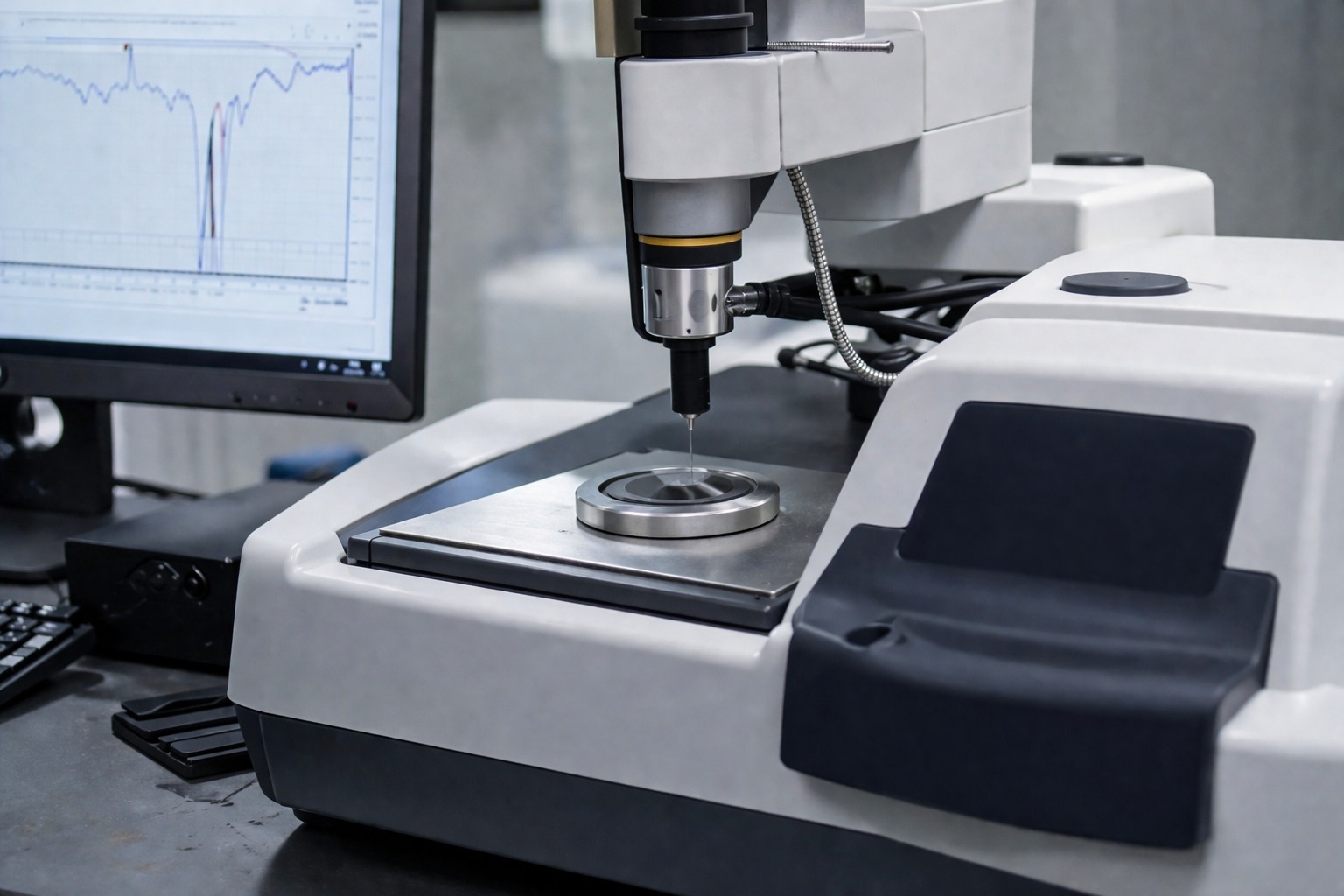
There are several methods to verify the cleanliness of metal-mechanical parts. Many are characterized by easy application (visual tests) and speed; others are more precise but require specialized equipment. The most commonly used are described below.
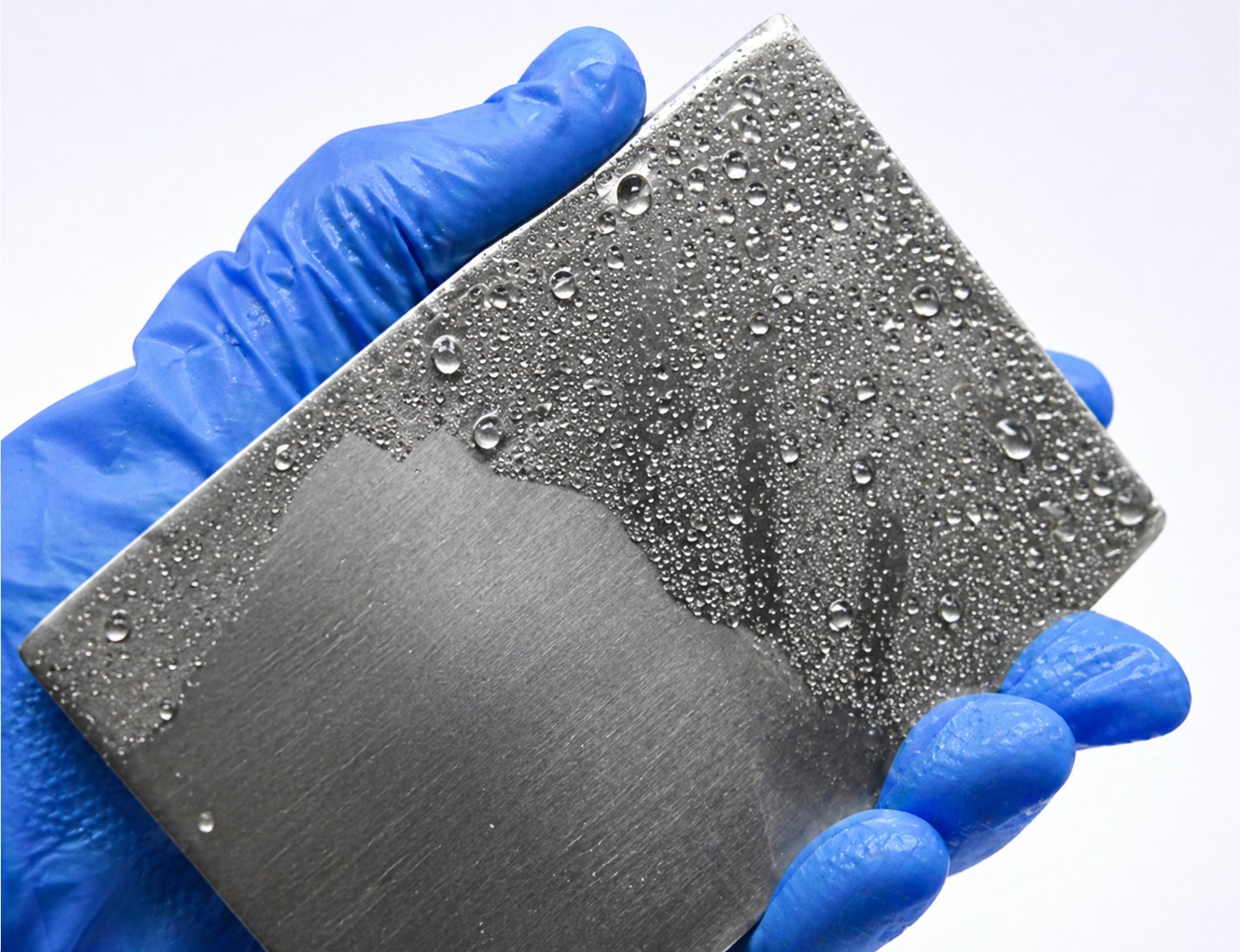
Water-Break Test
A fast, non-destructive method that can be used to control and evaluate processes for removing contaminants.
It consists of taking a piece of metal (already cleaned) and spraying distilled water over the surface. Depending on the size of the droplets, you can determine the cleanliness level:
- If droplets are small and distributed over the surface, degreasing was not adequate.
- If the water spreads smoothly over the metal, forming a continuous film, the cleanliness level is acceptable.
Clean-Wipe Test
Notable for its simplicity: only a white cloth is needed. It is purely visual.
Carefully wipe the dry part of the metal:
- If the cloth stays clean, the part is sufficiently clean.
- If the cloth gets dirty or discolors, the part still has residue on its surface.
Tape Test
Only a piece of transparent Scotch tape and a sheet of white paper are needed. The steps are:
- Place a piece of tape on the surface of the metal sample.
- Remove the tape and place it on a sheet of white paper.
- Place an unused piece of tape next to it as a standard.
- Read both strips with a color meter and compare.
Unlike the previous tests, the tape test samples only part of the surface, so it is necessary to check several points to confirm cleanliness.
Instrumental methods
There are methods that require more specialized equipment:
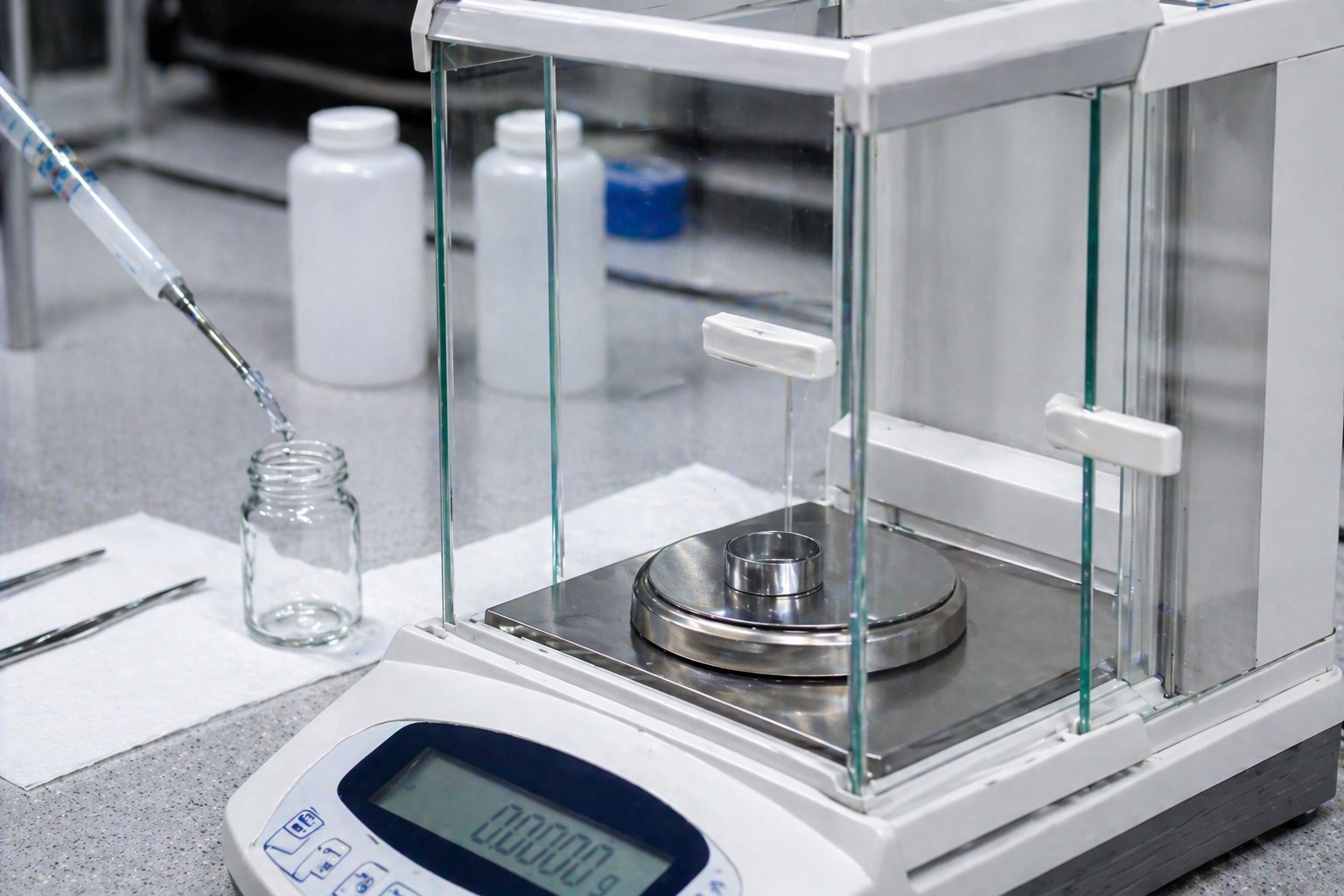
Gravimetry
Determines the difference in weight or soil removal. The sample is weighed, a solvent is applied and removed, and the part is weighed again. A significant difference indicates there was still soil remaining on the surface.
Scanning Electron Microscopy (SEM)
Qualitative and quantitative analysis of thin layers at the nanometer scale. It allows characterization of surface morphology and detection of contaminants that were not removed.
Infrared Spectroscopy (IR)
Detects petroleum-derived hydrocarbons on the surface. It not only indicates whether grease or oil residue is present but also identifies the contaminant type through its characteristic functional groups.
References
Trouble validating cleanliness on your line?
We'll help you set acceptance criteria and tune the degreaser to your process.
Contact Sales