The most important part of the metal-mechanical industry is cleaning (or degreasing). The method can vary depending on the form of application, material demands, and downstream treatments. Cleaners are diverse and vary in type and formulation.
As metal parts become increasingly complex and their correct operation demands stricter cleaning, the performance requirements for industrial degreasers grow alarmingly. Failure to clean components during and at the end of the manufacturing process can result in costly rework, production line delays, and damage to the company's reputation.
Degreasers are at the core of good maintenance: they prevent damage from contamination, imperceptible defects, and minimize equipment replacement. The better the degreaser, the less energy and labor time you need to spend.
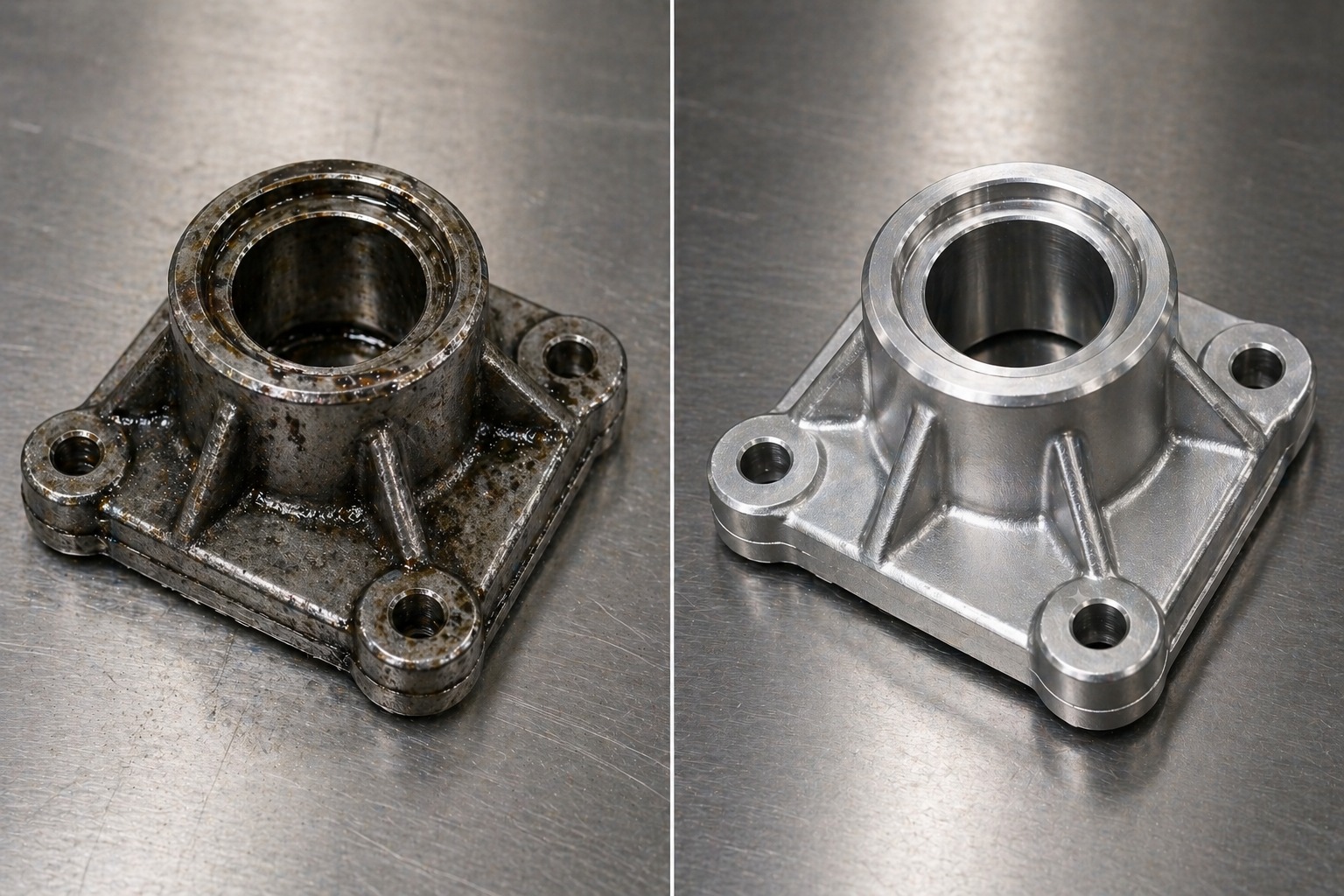
To correctly select a degreaser for a specific metal, you must understand the factors involved:
a) Surface to be cleaned
It is critical to know the type of surface you want to degrease to achieve a high-quality clean. There are two main groups:
- Ferrous metals, titanium, and magnesium alloys are not attacked by strongly alkaline solutions.
- Non-ferrous metals — aluminum alloys, copper, lead, tin, and zinc — can be attacked by uninhibited alkaline solutions.
b) Soil to be removed
The most common types of soil are:
- Process residues such as burrs
- Greases and oils
- Salts
- Corrosion products and oxides
- Stains
Depending on what you need to remove, the type of detergent is selected:
Acid detergent: pH below 7. Used to remove encrusted materials such as metal oxides or mineral salts.
Alkaline detergent: pH between 7 and 14. Used to remove greasy and organic residues from the metal surface.
c) Required cleanliness level
Not every operation demands the same cleanliness level; it depends on buyer requirements or the final application. Which product to use, at what concentration, and under what conditions are critical details in selecting the right chemistry.
d) Water quality
Another relevant parameter is the water used. If it has high hardness, it will cause issues with alkaline degreasers because they form insoluble calcium and magnesium soaps with hard water.
e) Application method
Cleaning solutions can be applied in various ways: manual, spray, immersion, with agitation, or combinations to increase the cleanliness level. It varies from company to company but with the same objective.
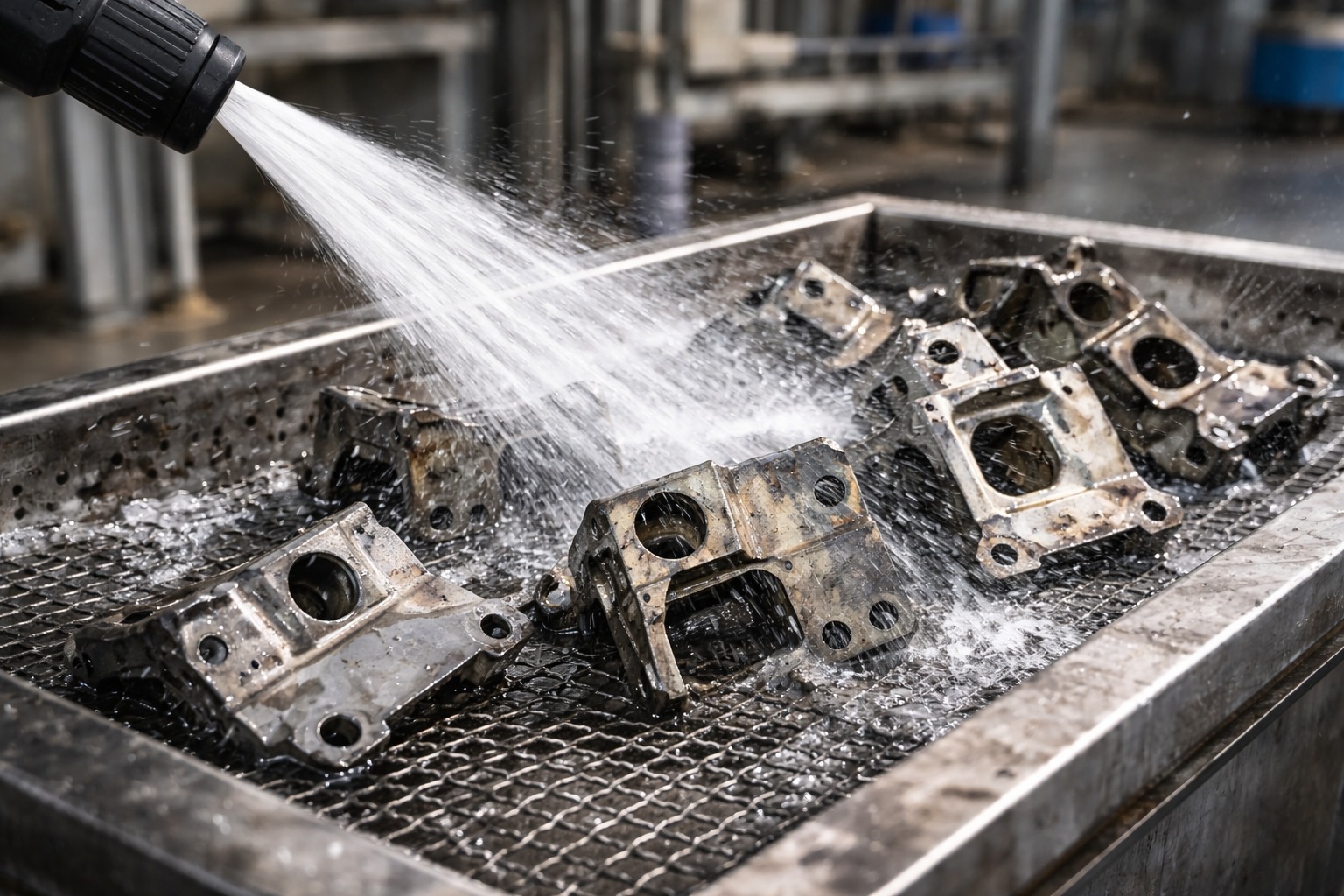
If the application is manual, the degreaser must be mild so it does not attack the skin; it also must not be toxic or flammable. Immersion without agitation requires high concentrations of soaps or emulsifying agents. Agitated applications should not use emulsifiers that generate heavy foam.
References
Looking for the right degreaser for your process?
Our team can help you choose the right formulation, concentration, and application method.
Contact Sales